
Billings, Montana, 2027–2031 Capital Improvement Plan (CIP) Alert
The City of Billings plans $890.1 million across 273 capital projects in its 2027–2031 CIP — a 59.4% increase over the prior plan.
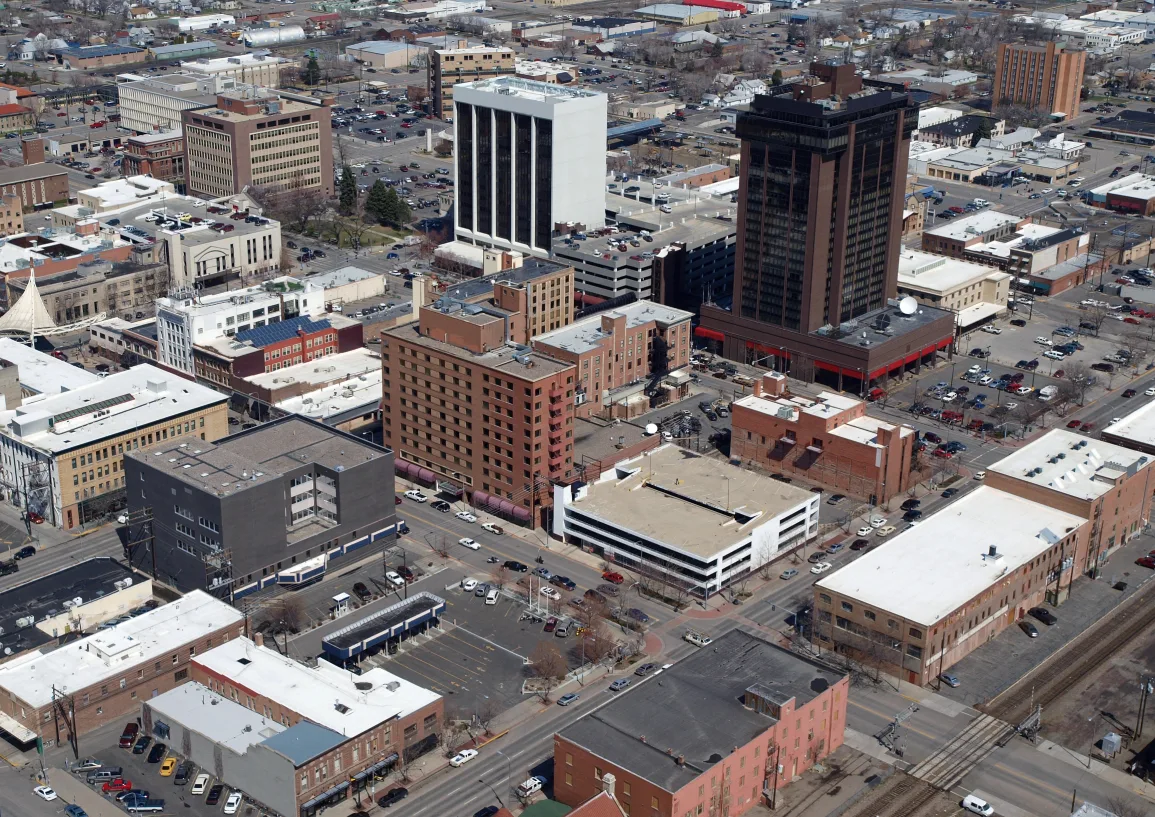
FirmoGraphs tracks capital improvement plans for counties, cities, and agencies across the United States to help architecture, engineering, and construction (AEC) firms identify upcoming project opportunities early. This CIP Alert examines the City of Billings, Montana’s latest five-year capital program and compares it to the prior plan to surface the most significant shifts, new investments, and emerging opportunities for firms operating in the region.
In the CIP covering fiscal years 2027–2031, Billings details plans to invest $890.1 million across its capital infrastructure — a 59.4% increase from the $558.5 million programmed in the 2026–2030 CIP. The number of distinct projects also grew substantially, from 154 to 273 — an increase of 119 projects, or 77.3%. This surge reflects an ambitious expansion in aviation, utilities, and transportation infrastructure.
Note: All dollar amounts are rounded to the nearest $100,000. Source data derived from official City of Billings CIP project files.
How Did Billings’ Capital Spending Change Between the Last Two CIPs?
Table 1: City of Billings, Montana — Planned Capital Spending (Prior vs. Current CIP)
| Metric | 2026–2030 CIP (Prior) | 2027–2031 CIP (Current) | Change |
|---|---|---|---|
| Total CIP Value | $558.5M | $890.1M | +$331.6M (+59.4%) |
| Distinct Project Count | 154 | 273 | +119 (+77.3%) |
| Average Project Value | $3.6M | $3.3M | −$0.4M (−10.1%) |
The 2027–2031 CIP represents a significant ramp-up in Billings’ capital ambitions. The $331.6 million increase in planned spending reflects both the addition of many new projects and meaningful expansions to existing programs. Notably, the average project value declined slightly — from $3.6M to $3.3M — indicating the growth is broad-based across many projects rather than driven by a small number of very large additions.
The jump in project count (from 154 to 273) reflects a city broadening its infrastructure investment scope. Several entirely new categories of spending appeared in the 2027–2031 plan — including Educational Facilities, Commercial Facilities, Vehicles, Power Generation, and a formal General Administration and Engineering category — signaling a more comprehensive capital planning approach than in prior cycles.
Which Departments and Business Areas Saw the Largest Changes in Billings’ CIP?
Table 2: Top 5 Business Areas by Change — City of Billings, Montana (2026–2030 vs. 2027–2031)
| Business Area | 2026–2030 CIP | 2027–2031 CIP | Change ($) | Change (%) |
|---|---|---|---|---|
| Streets and Roads | $160.1M | $242.9M | +$82.8M | +51.7% |
| Airports | $112.9M | $215.6M | +$102.7M | +90.9% |
| Drinking Water Conveyance | $52.1M | $127.7M | +$75.5M | +144.9% |
| Dams, Levees, Stormwater & Flood Control | $32.9M | $91.7M | +$58.8M | +178.8% |
| Public Spaces and Neighborhoods | $72.9M | $32.0M | −$40.8M | −56.1% |
| TOTAL (All Areas) | $558.5M | $890.1M | +$331.6M | +59.4% |
Four categories drove the bulk of the increase, each with a substantial dollar impact:
- Streets and Roads — the single largest spending category at $242.9M, up $82.8M (+51.7%), driven by ongoing pavement rehabilitation, arterial expansions, and major corridor projects.
- Airports — up $102.7M (+90.9%) to $215.6M, reflecting a wave of new aviation projects at Billings Logan International Airport including new parking garages, a runway extension, and a new ARFF operations building.
- Drinking Water Conveyance — up $75.5M (+144.9%) to $127.7M, reflecting a major push to rehabilitate and expand the city’s water distribution system.
- Dams, Levees, Stormwater & Flood Control — the largest percentage increase among established categories, up $58.8M (+178.8%) to $91.7M, signaling elevated attention to flood resilience.
Conversely, Public Spaces and Neighborhoods declined by $40.8M (−56.1%), the largest dollar decrease, partly driven by the removal of large grant-funded community programs — including the North Park Community Change Grant ($14.5M) and the Amend Park Recreation Center ($20.0M) — from the five-year window.
What Are the Largest Projects in Billings’ 2027–2031 CIP?
Billings’ 2027–2031 CIP includes several large-scale projects that together represent $194.2 million — approximately 22% of the total 2027–2031 CIP. The five largest by total project value are:
- Terminal Parking Garage – Phase II — $50.0M | Airports. A new terminal parking garage at Billings Logan International Airport, representing Phase II of a multi-phase airport parking expansion. This is a first-time entry in this CIP cycle.
- Wastewater – Annual Main Replacements — $42.2M | Wastewater Conveyance. Annual program to replace aging sanitary sewer mains citywide to reduce leaks and failures and maintain reliable service to customers. The city uses a Multi-Objective Decision Analysis (MODA) approach to prioritize replacements based on asset condition, safety, regulatory compliance, and service level objectives.
- Water – Annual Main Replacements — $42.2M | Drinking Water Conveyance. Annual program to replace aging water distribution mains to reduce leaks and failures and maintain reliable service. Prioritization is based on break history, age, and coordination with pavement preservation projects, using a MODA approach.
- Parking Garage Construction Phase I — $31.0M | Airports. Construction of a new parking structure at the Airport providing dedicated space for car rental companies and a smaller public parking section. A first-time CIP entry.
- Annual PAVER Program — $28.8M | Streets and Roads. Billings’ long-running preventative pavement maintenance program, established over 30 years ago, covering overlaying, crack sealing, and chip sealing of city streets. Streets are evaluated continuously and prioritized by condition, coordinated with planned utility work.
How Is Billings’ CIP Governed and Approved?
The City of Billings develops its Capital Improvement Plan through a structured annual process led by city department heads and coordinated by the City Administrator’s office. Departments submit capital project requests, which are reviewed and prioritized by city staff and the Mayor before being presented to the Billings City Council for adoption. The Council formally adopts the CIP as part of the city’s annual budget process, making it a five-year capital spending authorization and planning tool rather than a binding appropriation for all years beyond the first.
The FY2027–2031 CIP was formally adopted by the Billings City Council on December 8, 2025, following extended debate over utility rate-driven projects, trail funding allocations, and project-level estimates. The adopted plan reflects amendments and compromises reached during that council session, including the deferral of certain trail projects and adjustments to an evidence-lot expansion budget. For AEC firms, the adoption date marks the starting point for procurement planning — projects in the first two funded years are typically expected to enter design or RFP phases within 12–18 months of adoption.
What Is the History of Billings, Montana and Its Infrastructure Investments?
Billings, Montana was founded in 1882 as a Northern Pacific Railway town on the banks of the Yellowstone River, growing so quickly in its first years that it earned the nickname “the Magic City.” Today it is the largest city in Montana, with a 2026 population of approximately 123,600, serving as the commercial and healthcare hub for a regional trade area of more than 500,000 people spanning Montana, Wyoming, western North Dakota, and western South Dakota. Billings is the seat of Yellowstone County and anchors one of the fastest-growing metropolitan areas in the Northern Rockies.
Infrastructure has always been central to Billings’ identity. The city’s growth was propelled by successive waves of investment — railroad infrastructure in the 1880s, oil refinery construction in the mid-20th century, and highway development in the postwar decades. The Billings Logan International Airport has grown from a regional hub into a significant aviation gateway for the region, now undergoing its most ambitious expansion in decades. The city’s extensive street, water, and stormwater systems serve a geographically spread-out community and continue to require consistent, substantial capital reinvestment.
Fun Facts About Billings, Montana
- Billings is nicknamed “The Magic City” because it grew so rapidly after its 1882 founding as a railroad town — from a survey camp to a regional commercial center in just a few years.
- The city sits below the Rimrocks — dramatic sandstone cliffs rising approximately 400 feet above the city — defining its skyline and serving as a beloved natural landmark and recreation area.
- Billings is home to five oil refineries in its metro area, making it a key energy hub for the Northern Rockies and one of the most significant refining centers between the Midwest and Pacific Coast.
- The Yellowstone River, which flows near the city, is the longest undammed river in the contiguous United States — a major recreational and natural resource for the entire region.
- Billings serves as the medical hub for a region the size of California — its two major hospital systems serve patients from a 500,000+ person trade area across five states.
How FirmoGraphs Can Help
FirmoGraphs helps firms track CIP updates, compare capital plans across budget cycles, and identify where infrastructure spending is increasing by sector, geography, and owner. Billings’ plan is also tracked on Cities AI, FirmoGraphs’ intelligence platform for U.S. municipal infrastructure. For teams pursuing water, wastewater, utility, and public infrastructure work, that can support earlier market visibility and better pipeline planning.
References
- City of Billings, Montana — Official Capital Improvement Plan data. Prior CIP: City of Billings FY2026–2030 Capital Improvement Plan (source file: billingsmt.gov_cip_2026-2030). Current CIP: City of Billings FY2027–2031 Capital Improvement Plan (source file: billingsmt-gov-cip-2027-2031). All project values, counts, business area breakdowns, and comparisons derived from FirmoGraphs analysis of these official CIP project-level data records. City of Billings CIP official page: https://www.billingsmt.gov/2662/Capital-Improvement-Plan-CIP. Data accessed May 2026.
- FirmoGraphs, LLC. Business intelligence and data science firm specializing in the United States heavy infrastructure markets. https://www.firmographs.com. Oakland, CA. Founded 2017.
- City of Billings, Montana. “History of Billings.” City of Billings Official Website. https://www.billingsmt.gov/360/History. Accessed May 2026.
- World Population Review. “Billings, Montana Population 2026.” World Population Review, 2026. https://worldpopulationreview.com/us-cities/montana/billings. Accessed May 2026.
- Sharing Horizons. “Billings, Montana: Biggest City in the State.” Sharing Horizons, 2021. https://sharinghorizons.com/billings-montana-biggest-city-in-the-state/. Published 2021. Accessed May 2026.
- City of Billings, Montana. “Explore Billings.” City of Billings Official Website. https://www.billingsmt.gov/1776/Explore-Billings. Accessed May 2026.
Frequently asked questions
- What is the total planned capital spending in Billings' 2027–2031 CIP?
- Billings' 2027–2031 CIP plans $890.1 million in capital projects — an increase of $331.6 million (+59.4%) from the $558.5 million in the prior 2026–2030 CIP.
- How many capital projects are included in Billings' 2027–2031 CIP?
- The 2027–2031 CIP includes 273 distinct projects, compared to 154 in the prior CIP — an increase of 119 projects (+77.3%).
- Which infrastructure categories saw the largest changes in Billings' CIP?
- The largest dollar increases were in Airports (+$102.7M, +91%), Streets and Roads (+$82.8M, +52%), Drinking Water Conveyance (+$75.5M, +145%), and Dams, Levees, Stormwater & Flood Control (+$58.8M, +179%). Public Spaces and Neighborhoods saw the largest decrease (−$40.8M, −56%).
- What are the largest projects in Billings' 2027–2031 CIP?
- The five largest projects are: Terminal Parking Garage Phase II ($50.0M, Airports), Wastewater Annual Main Replacements ($42.2M), Water Annual Main Replacements ($42.2M), Parking Garage Construction Phase I ($31.0M, Airports), and the Annual PAVER Program ($28.8M, Streets and Roads).